Guides / Ad sizes
Facebook and Instagram ad sizes.
Checked against Meta's ads guide on 21 September 2026
Facebook and Instagram ads are bought in one place and share one set of sizes. Meta lists more than twenty placements, but they come down to four shapes. If you run a shop and you're boosting a post or putting £5 a day behind an offer, you need two of them at most.
The size chart
| Shape | Ratio | Pixels | Where it runs |
|---|---|---|---|
| Portrait | 4:5 | 1080 × 1350 (Meta recommends 1440 × 1800) |
Facebook feed, Instagram feed, boosted posts |
| Story | 9:16 | 1080 × 1920 (Meta recommends 1440 × 2560) |
Instagram and Facebook Stories, Reels ads |
| Square | 1:1 | 1080 × 1080 | Both feeds, carousels, Marketplace, search results |
| Landscape | 1.91:1 | 1200 × 628 | Link ads on Facebook, and most other networks |
On the two pixel figures: for years the standard answer was 1080 wide, and that still works. Meta's minimum for a feed image is only 600 × 750. Its ads guide now recommends 1440 wide, because phone screens have got sharper. The ratio is what matters. Get 4:5 or 9:16 right and either width is accepted.
Which size should a small shop use?
Portrait, 4:5. In the feed, a portrait ad is taller than a square one, so it fills more of the phone and gets looked at for longer, at the same price. It's the shape to use when you boost a post on Instagram or Facebook.
Add a 9:16 version if you're running Stories or Reels. If you hand Meta only a portrait image and leave "Advantage+ placements" on, it will put that image into Stories with coloured bars above and below. It works, but it looks like an ad that wasn't made for the space. A proper full-screen version does better.
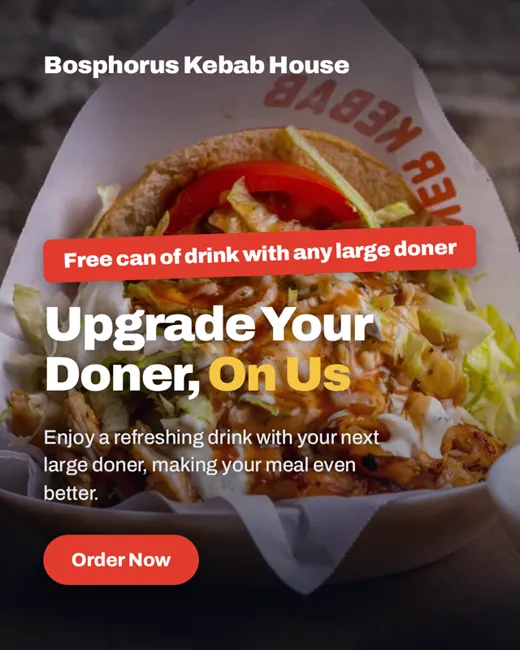
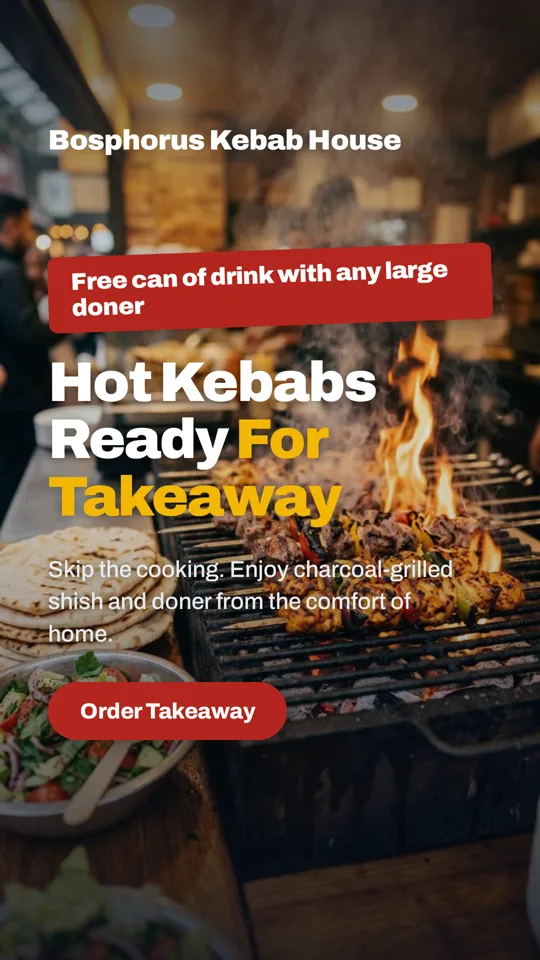
Safe zones: where not to put words
On Stories and Reels, Instagram and Facebook draw their own things over your ad: your profile picture and name at the top, the caption and the call-to-action button at the bottom. Meta's guidance is to keep text and logos out of:
- the top 14% (about 270 pixels on a 1080 × 1920 image),
- the bottom 35% (about 670 pixels),
- 6% on each side (about 65 pixels).
The photo itself can run edge to edge. It's only the headline, the price and the logo that need to sit in the middle. Feed ads don't have this problem, because the caption and button sit underneath the image rather than on top of it.
File type, file size and text limits
| What | Limit |
|---|---|
| Image file | JPG or PNG, up to 30MB |
| Video file | MP4 or MOV, up to 4GB |
| Smallest feed image | 600 × 750 pixels |
| Smallest Story or Reels image | 500 pixels wide |
| Primary text (the caption) | Aim for 50–150 characters; about 125 show before "See more" |
| Headline (link ads) | About 27 characters before it's cut off |
There's no longer a rule about how much of the image can be text. The old "20% rule" went in 2020. Meta still says ads with less text on the image tend to do better, and it's right: one headline, one offer, and let the photo do the rest.
Video ad sizes
The shapes are the same. Use 9:16 (1080 × 1920) for Reels and Stories, and 4:5 for a video in the feed. For a shop, a 9:16 video is the most useful single thing to have, because the same file is also what you'd post as an ordinary Reel, a TikTok or a YouTube Short. If you only have photos, a photo to video maker will get you there.
Common mistakes
- Boosting a landscape photo. It shows as a thin strip in a vertical feed. Crop to 4:5 first.
- Putting the offer at the bottom of a Story. The button covers it. Keep it in the middle third.
- Uploading a screenshot. Screenshots are compressed twice and look soft. Export the original file.
- Making one square image for everything. It's accepted everywhere, and it's the best shape nowhere.
Or have all four made for you.
Upload one photo and type the offer. ShopARoll writes the headline and lays the ad out as a Story, a portrait, a square and a landscape, with the words kept away from the top and bottom of the Story. It's free, and you see the ad before you sign up.
Start with your photoNext
- How to boost a post on Instagram, step by step.
- How much Facebook and Instagram ads cost in the UK, and what £5 a day buys.
Source for the specifications: Meta's ads guide. Meta changes these from time to time, so check there before a big campaign.